TypeScript, our trusty companion in the world of statically typed JavaScript, continues to evolve and make our coding lives even better. Today, we’ll delve into a feature that can significantly enhance your code’s clarity and simplicity: Generic Parameter Defaults. 💡
🤔 What Exactly Are Generic Parameter Defaults?
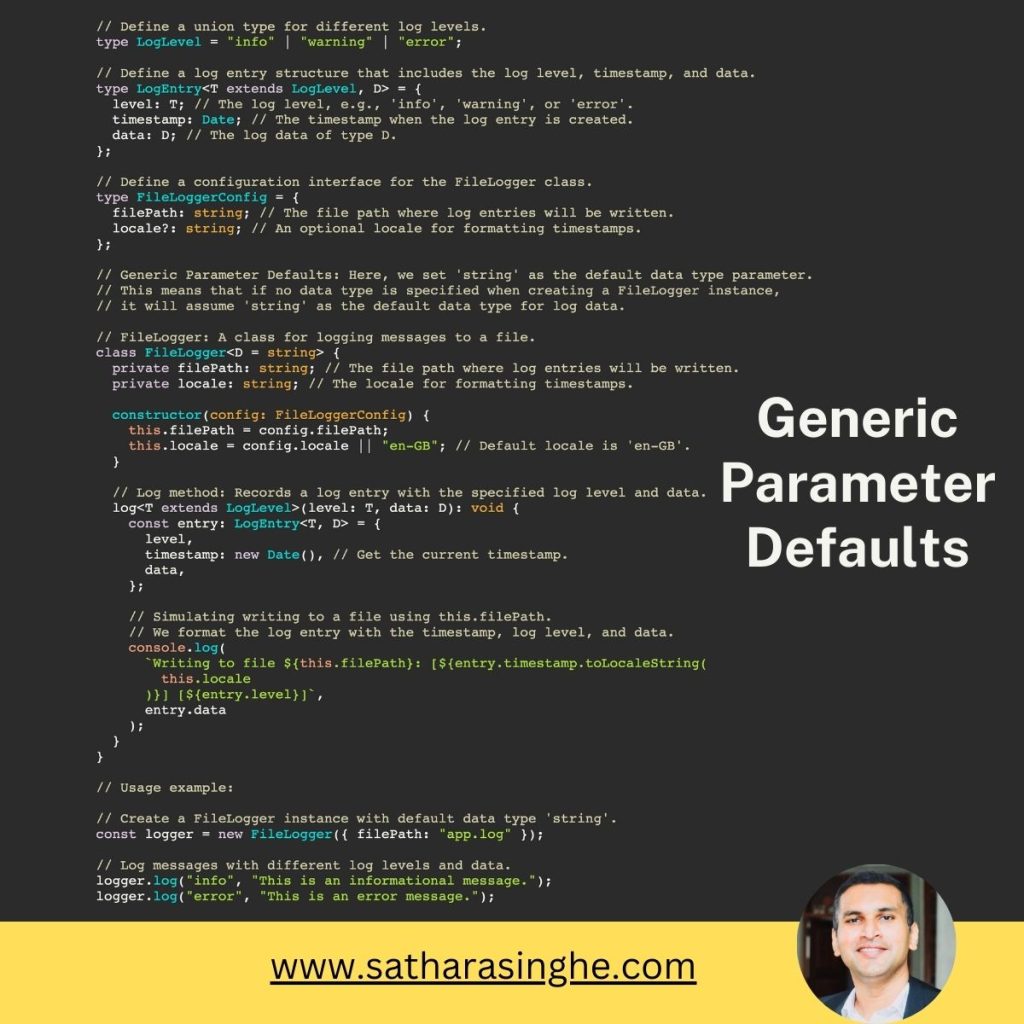
In TypeScript, Generic Parameter Defaults allow you to set default types for generic type parameters. Essentially, they enable you to make certain type parameters optional and provide default types if they aren’t explicitly defined.
🧐 Why Should We Consider This Feature
1. Cleaner Code: Generic Parameter Defaults can eliminate repetitive type annotations, resulting in cleaner, more concise code.
2. Enhanced Readability: By specifying common types upfront, your code becomes more understandable for your collaborators and your future self.
3. Flexibility: While you can rely on defaults, you can still specify explicit type arguments when necessary.
🚀 Simplify Your TypeScript Projects
The next time you embark on a TypeScript adventure, consider wielding the power of Generic Parameter Defaults. They are a valuable tool for streamlining your code while preserving type safety.
Have you explored Generic Parameter Defaults in your TypeScript projects? Share your insights and experiences in the comments below! 🌟
#TypeScript #JavaScript #Programming #CodeSimplicity
Leave a Reply