Hello, TypeScript enthusiasts! This week, we’re diving into a crucial aspect of TypeScript – the power of creating new types from existing ones using the Omit utility. This practice isn’t just about code elegance; it’s a cornerstone of data privacy and security in backend development.
🔧 Why Omit?:
Using Omit allows us to leverage existing type definitions while securely excluding sensitive or unnecessary properties. This method ensures our types remain synchronized with the base model, significantly reducing errors and enhancing maintainability.
🌍 Practical Scenario: Logging Without Compromise:
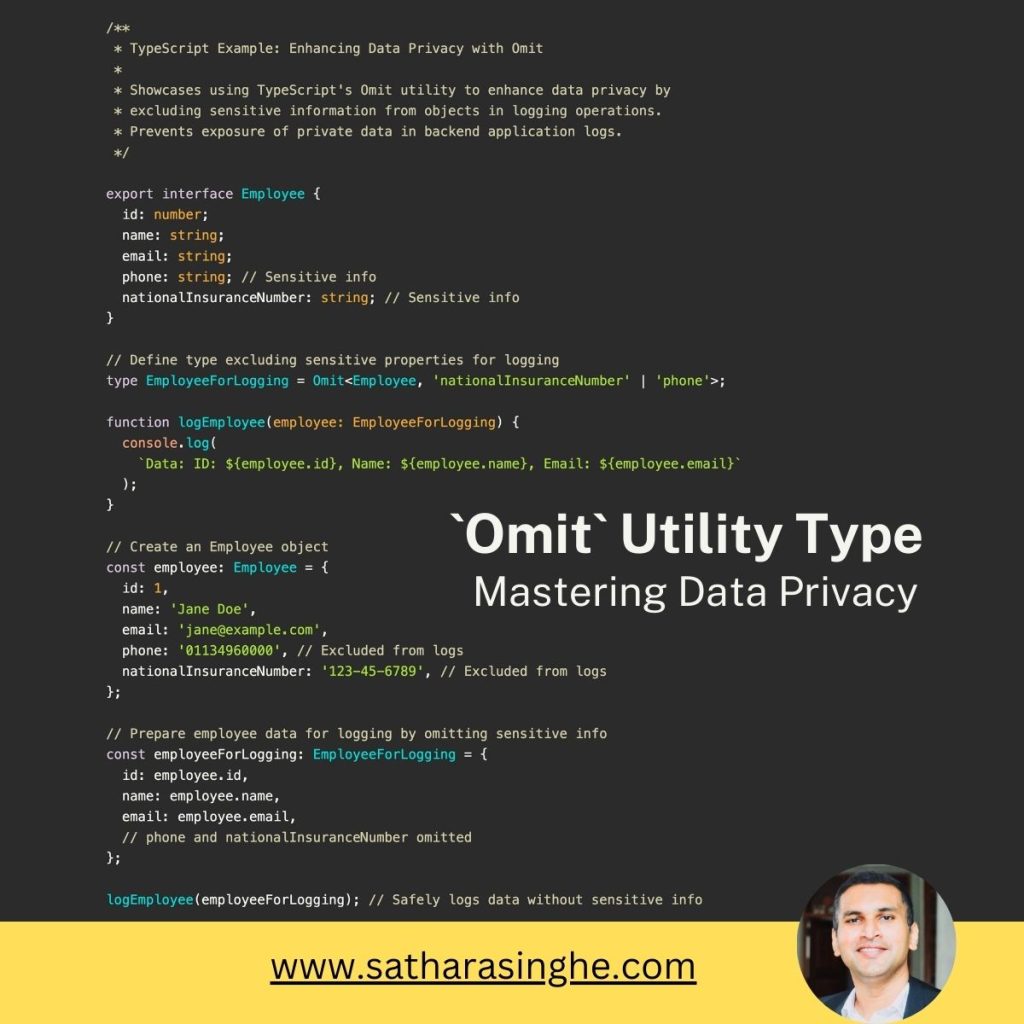
In backend development, logging is indispensable. However, it’s crucial to exclude sensitive information from these logs. By using Omit, we create derived types that are tailor-made for logging purposes, ensuring sensitive details like personal identifiers remain confidential.
💡 Our Approach:
Consider logging employee information without exposing sensitive data. Omit enables us to create a safe-to-log type from our base Employee type, ensuring privacy by design.
🔗 Explore the Example on GitHub:
For an insight into excluding sensitive data using Omit, see my GitHub example where we handle an Employee object to ensure privacy in logs:
👨💻 Pro Tip:
Always prefer creating types from existing ones where possible. It minimizes redundancy, keeps your code DRY, and ensures changes in the base type automatically reflect in derived types, reducing maintenance overhead.
🤔 Your Thoughts:
Have you utilized Omit or similar utilities in your projects? How has it impacted your development practices? Let’s discuss!
#TypeScript #JavaScript #DataPrivacy #BackendDevelopment #CodingBestPractices #platform
Leave a Reply