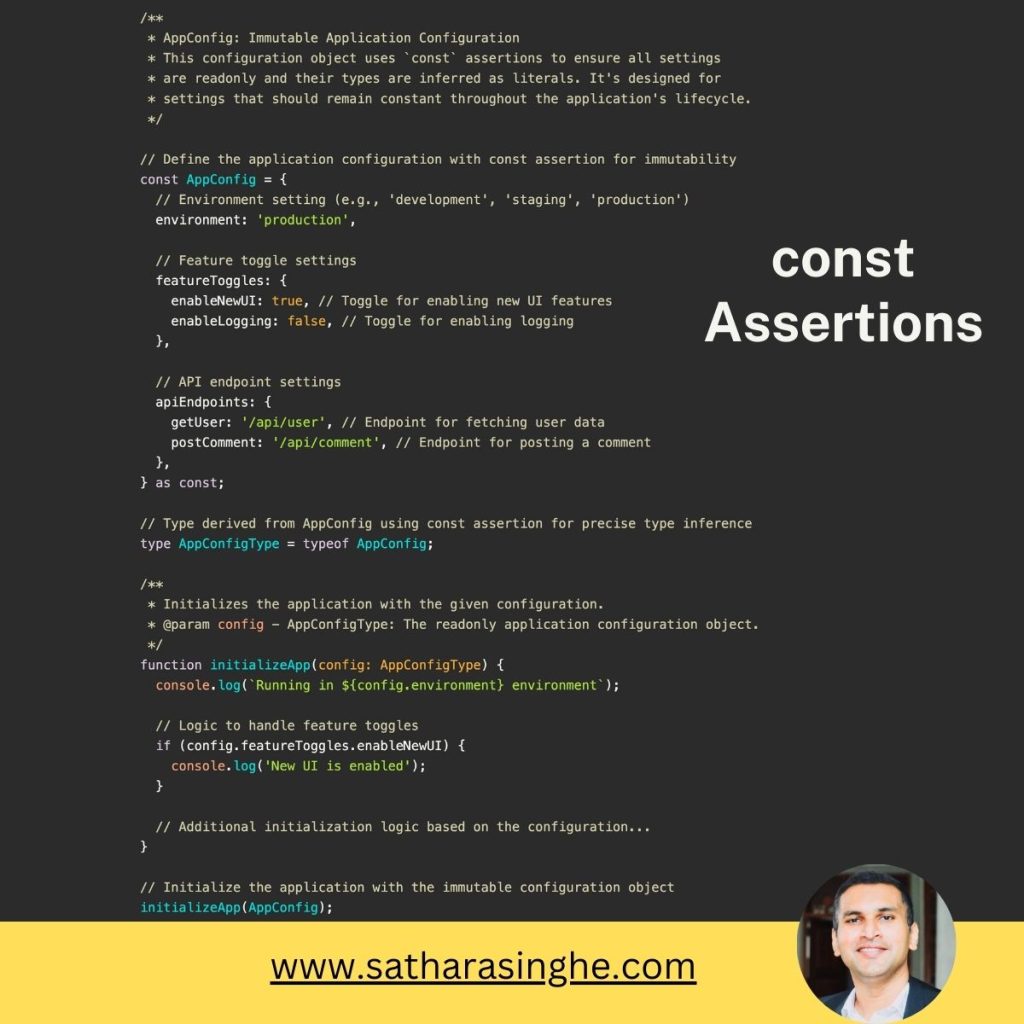
As software engineers, we continually seek ways to write more robust and maintainable code. Today, I want to shine a light on a feature in TypeScript that does just that: `const` assertions. Introduced in TypeScript 3.4, this feature is a game-changer for ensuring immutability and precise type inference in our applications.
🔍 Why `const` Assertions?
1. Immutable Configurations: Ensure your application’s settings remain unchanged, enhancing predictability and reliability.
2. Literal Type Inference: TypeScript infers the most specific literal types, reducing the chances of bugs due to type widening.
3. Readonly Properties: Perfect for defining configurations or constants that should not be altered after initialization.
👩💻 Whether you’re defining application configurations, setting up feature flags, or dealing with constants that should never change, `const` assertions are your friend.
💡 Pro Tip: Use them judiciously! While they offer many benefits, remember that overly restrictive types can limit flexibility.
🤔 Have you used `const` assertions in your TypeScript projects? What impact did they have on your code’s maintainability and robustness?
#TypeScript #JavaScript #SoftwareEngineering #CodingBestPractices #WebDevelopment #CodeQuality #Node.js
Leave a Reply