Hello, TypeScript community! This week, we’re diving into the versatility of Index Signatures in TypeScript, a powerful feature for managing dynamic and flexible data structures in blockchain applications and beyond.
🔧 The Flexibility of Index Signatures:
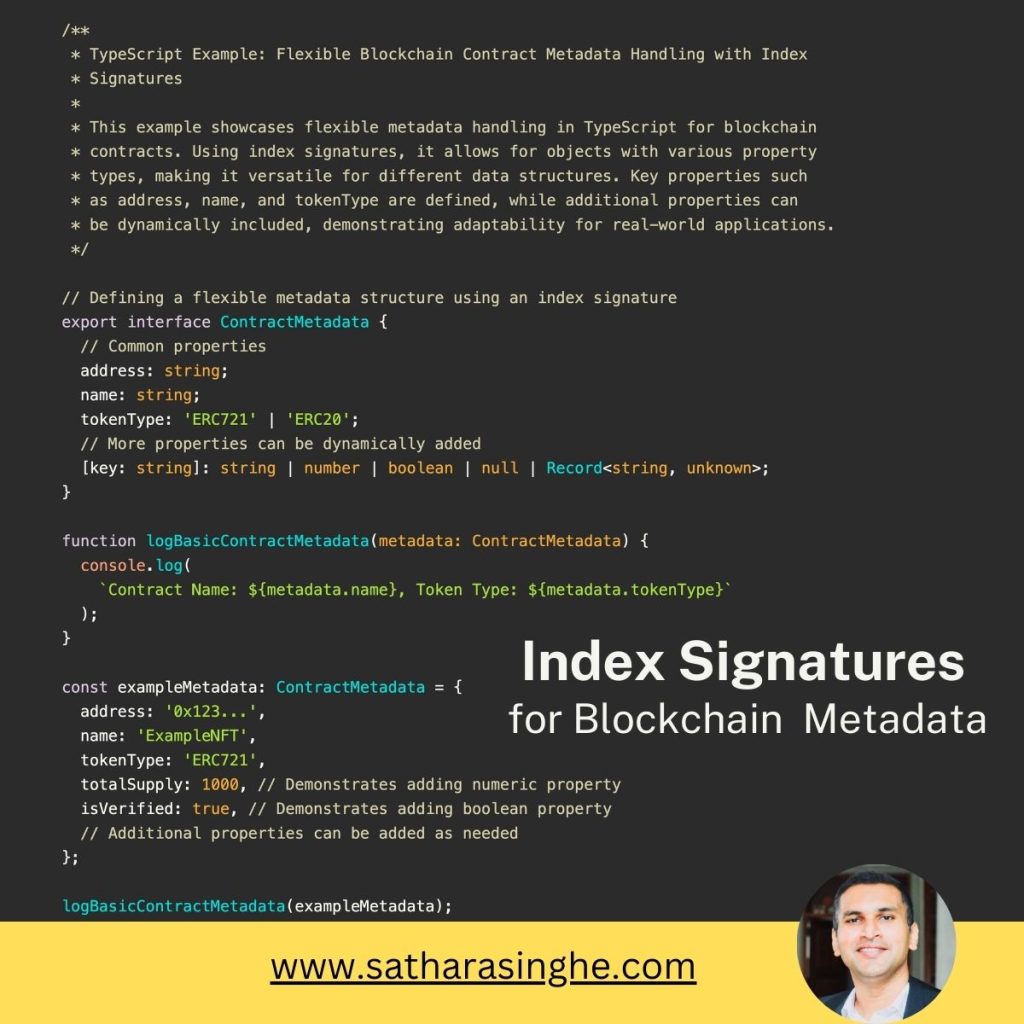
Index Signatures offer a dynamic way to create objects with properties of various types, enhancing adaptability across different data scenarios. This flexibility is key in applications requiring a broad range of data properties without predefined limits.
🌍 Real-World Application:
Envision a blockchain platform where contract metadata constantly evolves. Index Signatures enable us to accommodate these changes seamlessly, ensuring our data handling remains robust and versatile.
💡 Our Strategy:
We leverage Index Signatures to cater to the dynamic nature of blockchain metadata, allowing for an object-oriented approach that can effortlessly adapt to new data types and structures.
🔗 Explore the Example on GitHub:
See Index Signatures in action on my GitHub, where we handle blockchain contract metadata with ease and flexibility:
👨💻 Pro Tip:
Utilize Index Signatures to embrace the dynamic and evolving nature of your application’s data. This approach not only simplifies development but also enhances the scalability of your TypeScript projects.
🤔 Share Your Experience:
Have you utilized Index Signatures in your TypeScript projects? How have they transformed your approach to data handling? Let’s share and learn from each other’s experiences!
#TypeScript #IndexSignatures #Blockchain #DataHandling #SoftwareDevelopment #BestPractices #JavaScript #platform
Leave a Reply