Hello again, TypeScript fans! Building on our journey with Method Decorators, this week we’re stepping up to explore how to pass structured parameters to these decorators, adding an extra layer of flexibility to our backend services.
🌐 Evolving the Use of Method Decorators:
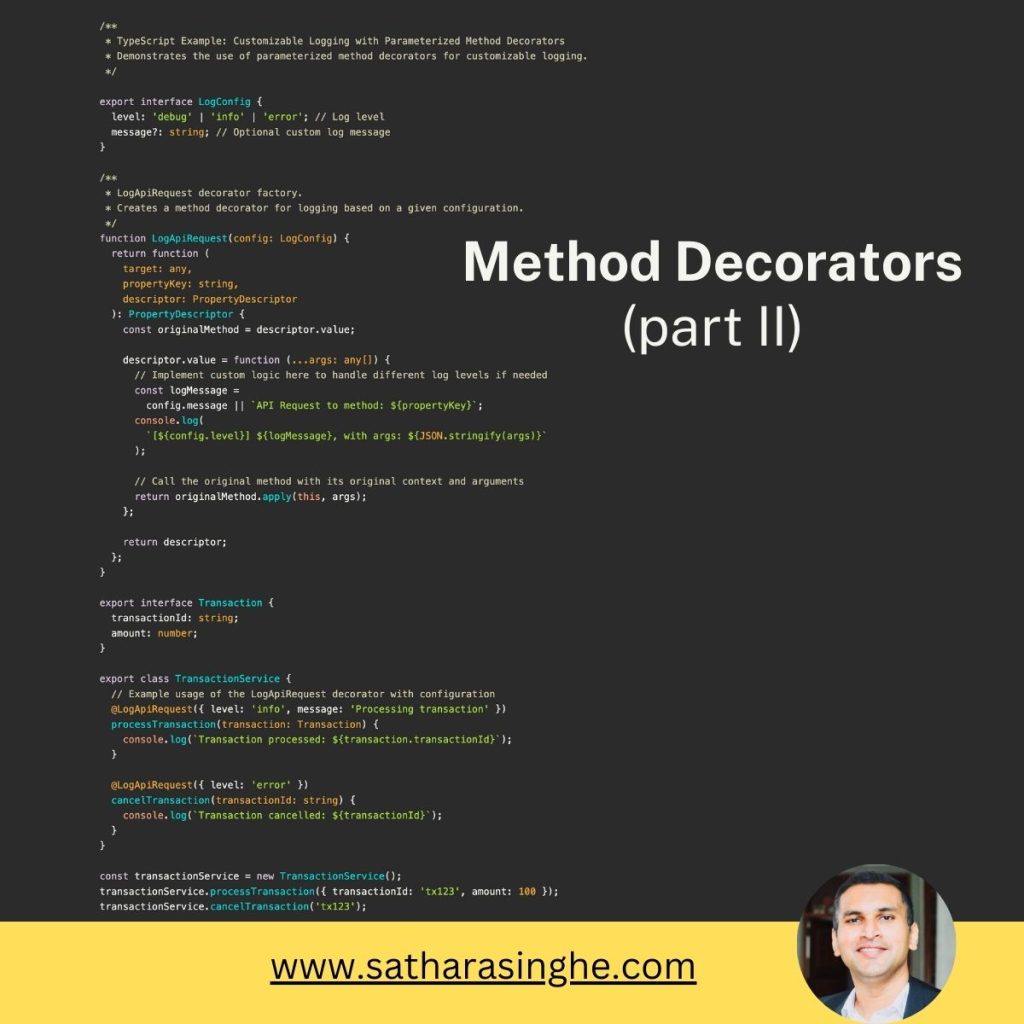
While we’ve seen the power of decorators in streamlining backend operations, the real magic unfolds when we introduce structured parameters. Using interfaces like LogConfig, we can create decorators that adapt to more detailed and specific requirements of each method.
🚀 Real-World Scenario: Customized Logging
Imagine enhancing our TransactionService with a LogApiRequest decorator that takes a LogConfig object, allowing us to specify different logging levels and custom messages for various operations. This structured approach brings immense value in customizing how our services handle logging.
💡 Advantages of Parameterized Decorators with Interfaces:
- Detailed Customization: Leverage interfaces to provide detailed configuration options for your decorators, enhancing their adaptability and precision.
- Consistency & Clarity: Using a structured approach like LogConfig brings consistency and clarity to the way parameters are passed and interpreted.
- Enhanced Flexibility: Tailor the behavior of your decorators to align perfectly with the specific needs of each method, ensuring a high level of control and dynamism.
🔗 Explore the Example on GitHub:
Dive into the TransactionService implementation using the LogApiRequest decorator with LogConfig on my GitHub for a comprehensive understanding:
👨💻 Pro Tip: Dynamic Behavior
Embrace the power of interfaces in decorators to fine-tune and dynamically adapt method behaviors based on runtime configurations or conditions. This strategy significantly bolsters the flexibility and robustness of your TypeScript applications.
🤔 Your Experiences with Advanced Decorators
Have you delved into using interfaces with parameterized decorators in TypeScript? How has this approach transformed the way you manage method functionalities in your projects? Share your stories and insights!
#TypeScript #MethodDecorators #DynamicProgramming #BackendDevelopment #SoftwareEngineering #WebDevelopment #ParameterizedDecorators #CodingExcellence
Leave a Reply